Published on Tue Jun 30 2026 03:00:00 GMT+0300 (Eastern European Summer Time) by Megrov
There is a distinct moment on a dark dancefloor where the music stops feeling like an external sound and starts acting as a visceral, physical driver. As a DJ and producer specializing in Hypnotic and Raw Techno, my creative focus is entirely on continuous momentum—pacing a room between 138 and 142 BPM using looping textures, modular modulations, and steady low-end sub-bass pressure.
While club culture often frames this experience in purely emotional, spiritual, or social terms, acoustic science and neurological research reveal that hypnotic techno is actually a highly efficient mechanism for systematically altering human cognitive states.
1. Brainwave Entrainment: Synchronizing the Auditory Cortex
At the core of techno’s hypnotic power is a physiological phenomenon known as Auditory Driving or Brainwave Entrainment. The human brain functions via electrical impulses that oscillate at specific frequencies, dictating our active states of consciousness (ranging from high-alert Beta waves to deep-sleep Delta waves).
When the human auditory system is subjected to a steady, repetitive acoustic pulse over a prolonged duration, the brain’s neural oscillations naturally begin to mirror the periodic frequency of that external stimulus (Neher, 1961).
A techno track set at a driving tempo of 140 BPM translates mathematically to a transient acoustic pulse occurring at a frequency of exactly $2.33\text{ Hz}$. While a pure $2.33\text{ Hz}$ frequency falls into the deep, restorative Delta wave territory, the consistent sixteenth-note subdivisions, shifting polyrhythmic percussion loops, and rolling sub-bass baselines commonly utilized in raw hypnotic arrangements operate at higher mathematical multiples. These transient subdivisions trigger frequency harmonics that actively down-regulate frantic Beta wave activity ($12\text{—}30\text{ Hz}$)—the state associated with everyday analytical anxiety—and lock the dancer’s neural activity directly into the Alpha ($8\text{—}12\text{ Hz}$) and Theta ($4\text{—}8\text{ Hz}$) bands (Will & Turow, 2011). This is the exact neurological spectrum associated with deep meditation, flow states, and high-level abstract visualization.
2. Deactivating the Default Mode Network (DMN)
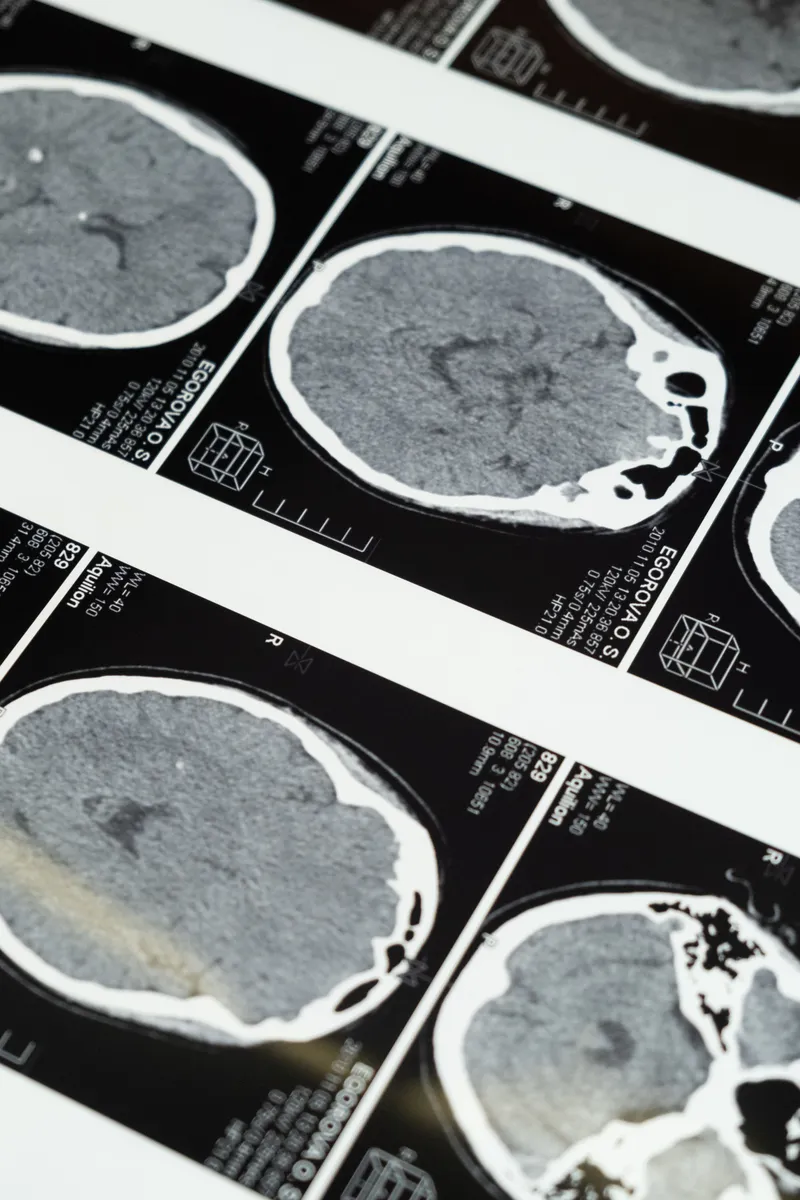
Have you ever noticed that during an extended, repetitive hypnotic techno set, your acute sense of self-awareness, personal anxieties, and linear time perception completely evaporate? This isn’t just a psychological byproduct of dark rooms and strobe lights; it is the physical deactivation of the brain’s Default Mode Network (DMN).
The DMN is a network of interacting brain regions—primarily involving the medial prefrontal cortex and the posterior cingulate cortex—closely linked to ego processing, self-reflection, past/future mental time travel, and the narrative construct of “the self” (Carhart-Harris et al., 2014). In neuroimaging studies, highly repetitive, high-momentum auditory stimuli have been shown to temporarily disrupt and down-regulate functional connectivity within the DMN.
By keeping harmonic melodic changes absolutely minimal and focusing entirely on micro-modulations of a singular, looping sonic landscape (using manual filters, phase adjustments, and automated lfo lines inside Ableton Live 12), hypnotic techno deprives the analytical mind of “new” structural events to process. With no sudden transitions or melodic breakdowns to calculate, the cognitive narrative engine goes offline, inducing a state of absolute presence—colloquially known on the floor as getting completely lost in the loop.
3. Sub-Bass Physics and Somatosensory Resonance
The hypnosis of techno isn’t purely cranial; it is deeply visceral. High-fidelity club environments utilizing premium sound reinforcement systems (like professionally tuned Funktion-One, L-Acoustics, or d&b audiotechnik arrays) allow sub-bass frequencies sitting between $30\text{ Hz}$ and $60\text{ Hz}$ to move literal masses of physical air.
These low-frequency acoustic waves bypass the eardrum entirely and interface directly with the human body via somatosensory resonance (Todd, 1993). The human chest cavity has a natural acoustic resonant frequency hovering around $7\text{ Hz}$, while internal organs react dynamically to tactile acoustic pressure waves under $50\text{ Hz}$.
When a rolling, hypnotic sub-bass line punches through a high-power sound system at 140 BPM, it acts as a tactile pacemaker. The physiological syncopation induces a mild, controlled release of endorphins and dopamine as the physical body is forced to harmonize with the acoustic pressure waves. As a producer, understanding this physics dictates how I mix low-end frequencies—ensuring that the kick drum transient and the sub-bass baseline retain distinct, clean phase separation so the physical body can process the structural impact without suffering sonic fatigue.
Techno isn’t a commercial game; it’s a precise acoustic science experiment where the dancefloor is the laboratory.
Academic References & Further Reading
- Carhart-Harris, R. L., et al. (2014). The entropic brain: a theory of conscious states informed by neuroimaging research with psychedelic drugs and related states. Frontiers in Human Neuroscience, 8, 20. (On Default Mode Network down-regulation and altered states).
- Neher, A. (1961). Auditory driving observed in the EEG of the normal subject. Electroencephalography and Clinical Neurophysiology, 13(3), 449-451. (Foundational research on repetitive rhythmic drumming inducing brainwave synchronization).
- Todd, N. P. (1993). The dynamics of dynamics: A model of musical expression. Journal of the Acoustical Society of America, 94(6), 3505. (Investigating the somatosensory and vestibular response to intense low-frequency sound).
- Will, U., & Turow, G. (2011). Music, Science, and the Rhythmic Brain: Foundations and Clinical Applications. University of Chicago Press. (Analyses of rhythmic auditory entrainment and neurological frequency tracking).